JAIPUR: India finds itself navigating two very different headlines this week — one rooted in the ongoing turbulence of West Asia, and the other in the country's steady progress in space technology.
US-Iran Conflict Continues to Rattle Global Trade and Energy Markets
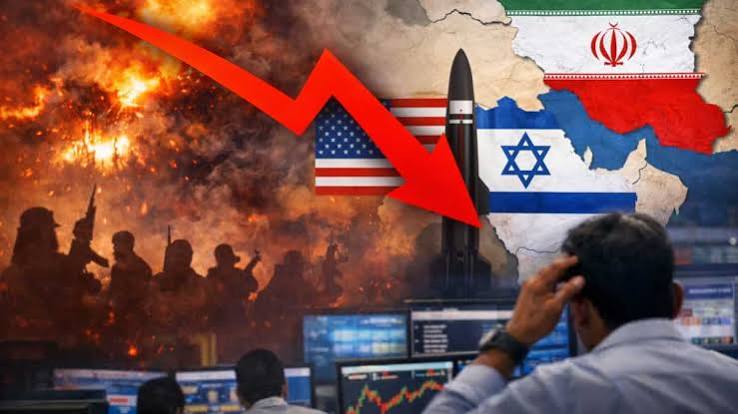
The conflict between the United States and Iran, which began in February 2026, remains unresolved despite a brief ceasefire reached in June that has since collapsed. Iran's armed forces have continued missile and drone operations against Israeli-occupied territories and US military assets in the region, while repeated disruptions to shipping through the Strait of Hormuz — a corridor that carries around a fifth of the world's oil trade — have rattled global energy markets.
Prime Minister Narendra Modi has repeatedly flagged the wider fallout of the conflict for India and the global economy. Earlier this year, he urged citizens to cut fuel consumption, reduce non-essential travel, and hold off on gold purchases, warning that the crisis represented a serious risk to India's economy. India imports close to 85% of its fuel needs and depends on the Strait of Hormuz for roughly half its crude oil and 60% of its liquefied natural gas, making it particularly exposed to any prolonged disruption.
Most recently, Modi met Iranian President Masoud Pezeshkian on the sidelines of the Shanghai Cooperation Organisation Summit in Bishkek on August 31 — their first in-person talks since the war began. During the meeting, Pezeshkian said the United States appeared interested in "continuing the war," while accusing Washington of failing to honour commitments made under a Pakistan-mediated framework agreement. Modi, for his part, reiterated India's consistent position that dialogue and diplomacy remain the only path to resolving the crisis, while stressing concerns over regional stability and the conflict's impact on global trade and energy routes.
The economic toll has already been significant: brokerage UBS Securities has pointed to the conflict as a "historically large energy shock," trimming its forecast for India's GDP growth in the financial year ending March 2027, and the International Energy Agency has described the disruption as among the most severe the global oil market has faced.
ISRO Set to Launch EOS-05 (GISAT-1A) on September 4
Amid these global pressures, the Indian Space Research Organisation is preparing for a significant mission of its own. ISRO is scheduled to launch the EOS-05 satellite, also known as GISAT-1A, aboard the GSLV-F17 rocket on September 4, 2026, from the Second Launch Pad at the Satish Dhawan Space Centre in Sriharikota, Andhra Pradesh.
EOS-05 is designed as India's first imaging satellite in a geosynchronous orbit and serves as a replacement for the GISAT-1 (EOS-03) mission, which was lost in August 2021 after the cryogenic upper stage of its GSLV rocket failed to ignite. Weighing around 2,367 kg, the satellite will initially be placed into a Sub-Geosynchronous Transfer Orbit before using its own thrusters to climb to its final position roughly 36,000 km above the equator.
Once operational, EOS-05 is expected to provide near-real-time imagery of the Indian subcontinent at intervals of about 30 minutes, with a revisit time of just five minutes for priority targets — a capability aimed at supporting disaster management, weather monitoring, agricultural assessment, and security-related observation.
The mission carries added significance for ISRO after a string of recent setbacks, including the failures of PSLV-C61 (carrying EOS-09) in May 2025 and PSLV-C62 in January 2026, as well as a thruster failure on the NVS-02 navigation satellite. A successful EOS-05 launch would mark an important step in restoring confidence in the agency's Earth observation and geosynchronous launch programmes.
This article is based on publicly reported information as of September 2026. Launch schedules are subject to change based on weather and technical readiness.